NBC Newsroom Ecosystem
Architecting an AI-powered ecosystem that unified fragmented legacy systems and connected multinational news teams across the enterprise.
Client
NBCUniversal
Sept 2022 - March 2024
Contribution
Lead Designer
Product Strategist
Team
4-person design team I founded & led
Partners
SVP
Sr. Director
Sr. Product Owners & Analysts
Engineering
The news never stops, but NBC News' tools slowed teams down and made people start over every morning.
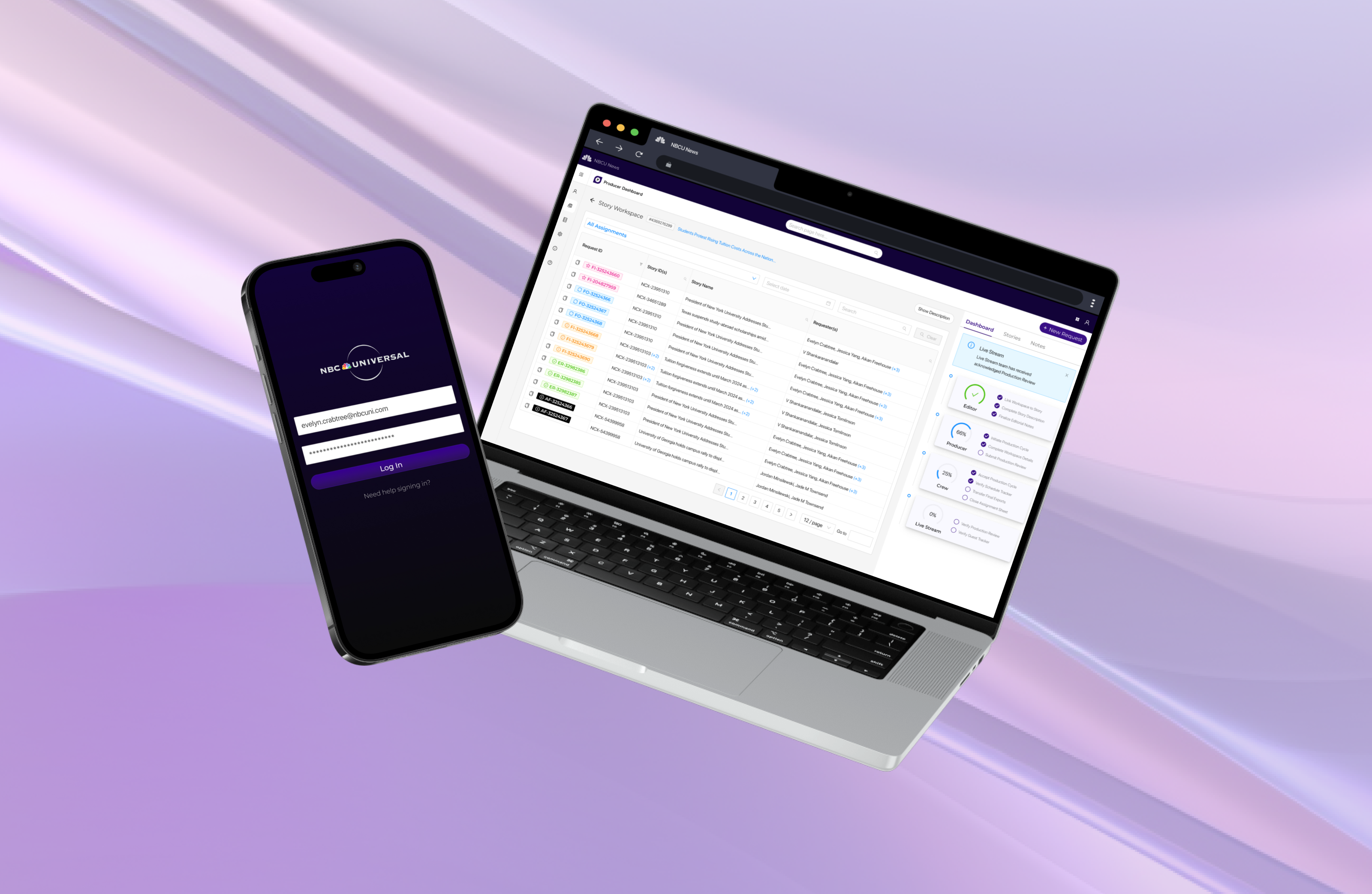
Journalists, producers and crews were running the news across 13 legacy tools, rebuilding their workspace by hand every day. I founded and led the design team that consolidated them into a 7-tool ecosystem, lifting end-user workflow efficiency by 36%.

Impact
at-a-glance
13 → 7
tools in one moderized ecosystem
34%
lift in workflow efficiency for newsroom end users
41%
improvement in portfolio delivery vs. prior years
TL;DR Summary
Problem: NBC News ran on 13 legacy tools. Every day, users logged in, rebuilt their views by hand and dug through confusing layouts to find their work.
What I did: Founded and led a 4-person design team, set product strategy with SVP leadership, and architected the move to a 7-tool ecosystem on new servers.
Outcome: 36% lift in end-user workflow efficiency, saved personalized views, AI-assisted story tagging, and 41% better portfolio delivery.
My role: Lead Designer and Product Strategist across a portfolio of tools, Sep 2022 to Mar 2024.
The problem: 13 tools and a daily reset
News moves in minutes. NBC News's internal tools made every journalist, producer, director and crew member lose time before the work even started.
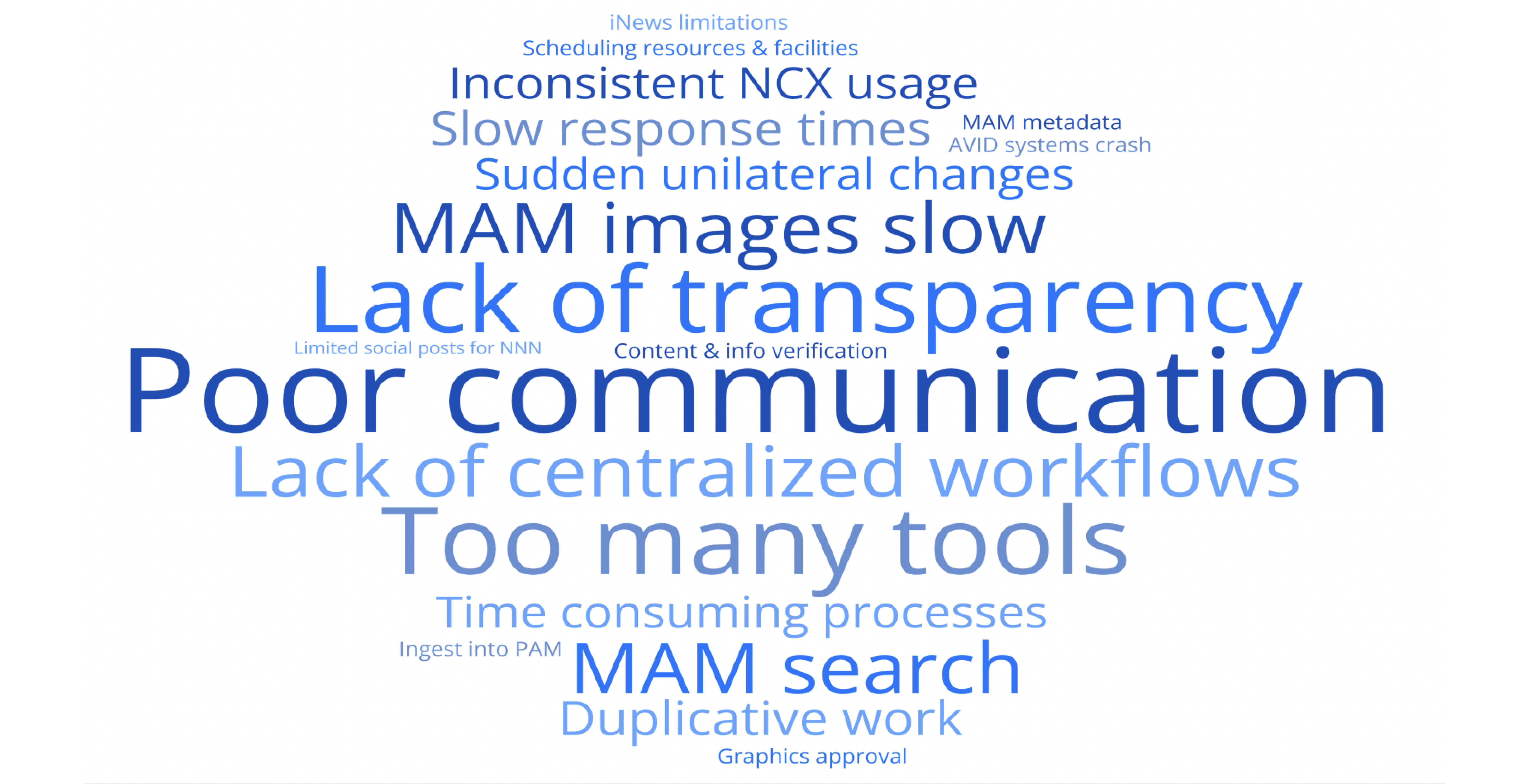
Across 13 legacy tools, users faced the same friction every day:
- Rebuild your workspace. Views had to be customized by hand at every login.
- Hunt for your work. Confusing layouts and weak hierarchy buried the stories people needed.
- Fight the system. Errors and inconsistent data entry made information unreliable.
- Lose the thread. Stories, assets and related coverage lived in separate tools, with no easy way to see how they connected.
The tools also had to move onto new servers, so this was a full modernization, not a visual refresh.
My role
I founded NBCU's 4-person newsroom product & strategy design team and led it as Lead Designer and Product Strategist. I partnered directly with the SVP, a Sr. Director, Sr. Product Owners, Product Analysts and Engineering.
What I owned:
- Product strategy for the ecosystem, presented to and aligned with SVP leadership
- Ecosystem architecture, helping define how 13 tools became 7
- Execution of the redesigned tools, from research through delivery
- Team building, from hiring through day-to-day design leadership
Discovery: one newsroom, dozens of workflows
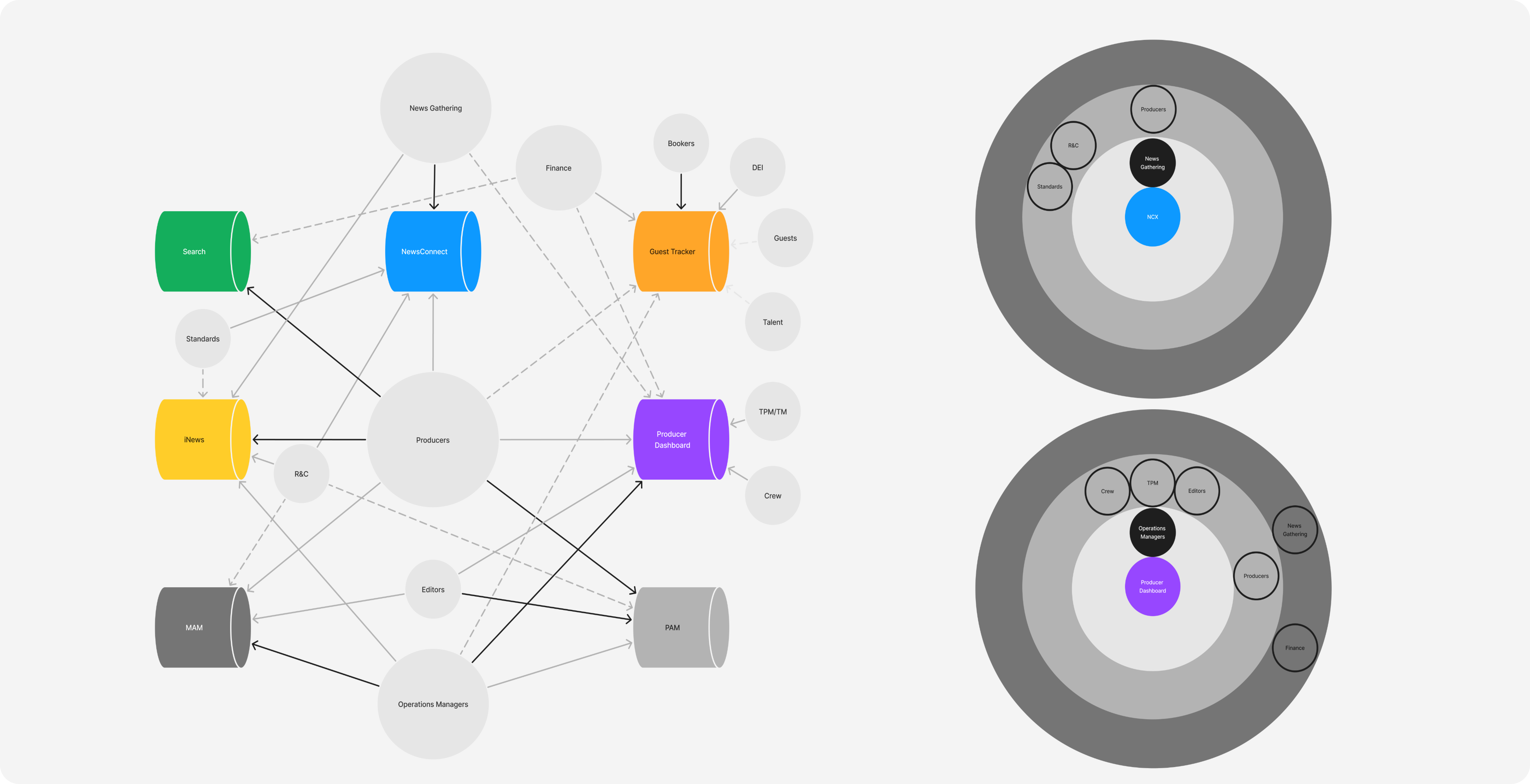
Research with journalists, producers, directors and crews showed there was no single "newsroom workflow." Each role, and often each person, had built their own customizations and habits around the old tools.
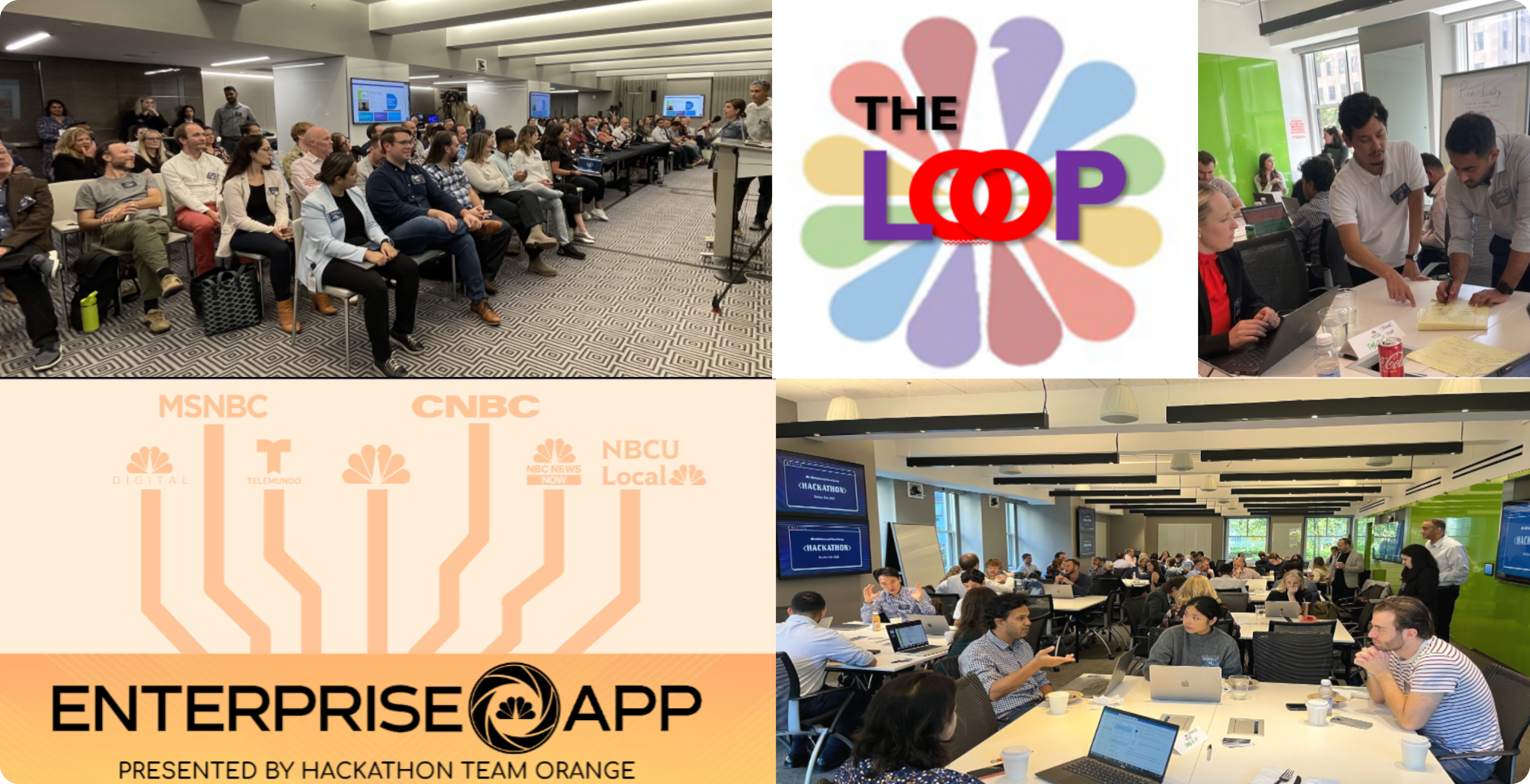
We organized a series of roadshows to showcase our proposed AI-driven solutions that would reshape the future of news across the entire company, and even hosted a hackathon to capture new ideas and uncover mental models from teams across the organization.
The key insight: the problem wasn't any one tool. It was the seams between them, and the daily work of rebuilding context that people had to do themselves.
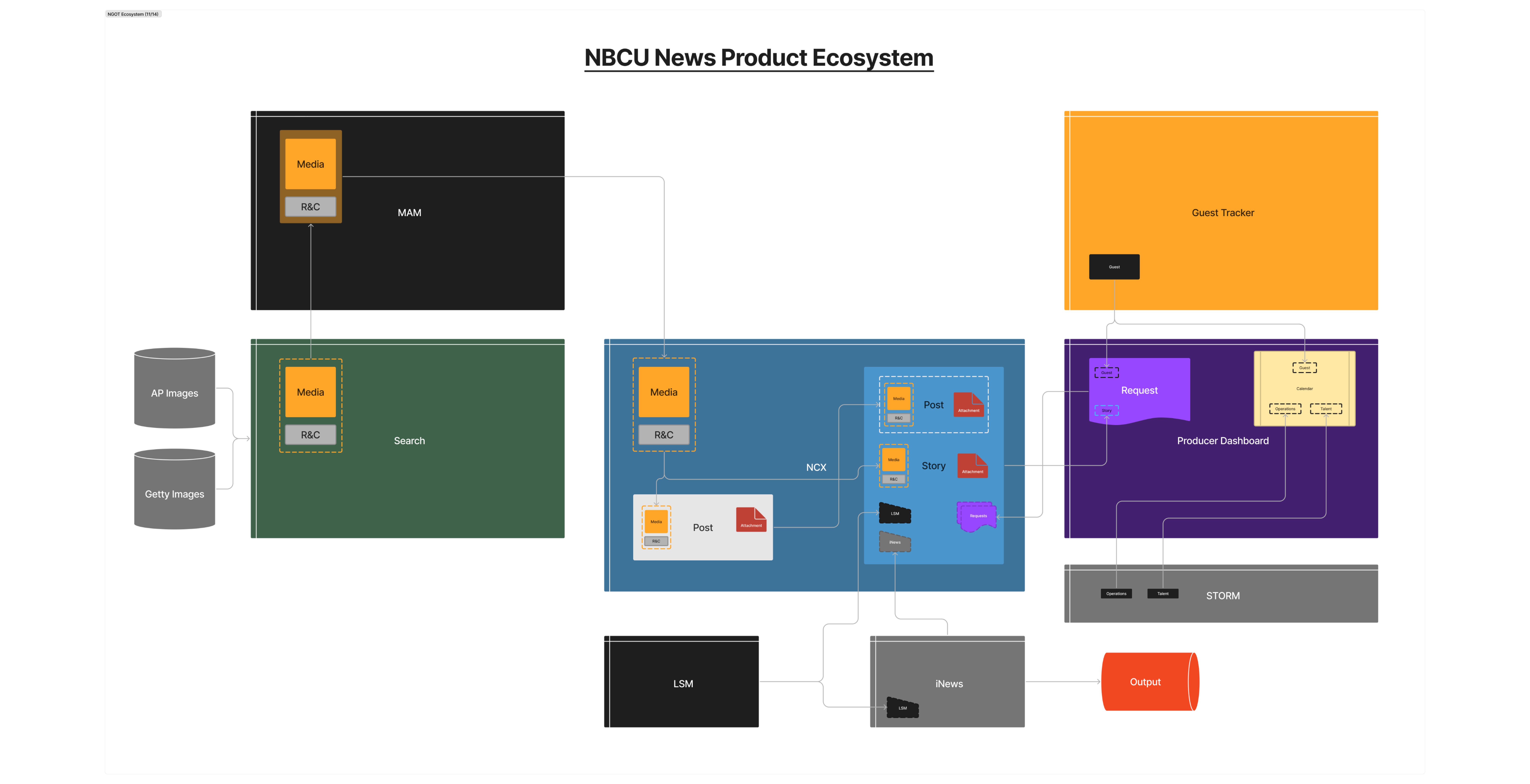
The ecosystem: 13 tools into 7
I architected, strategized and executed the consolidation of 13 legacy tools into a 7-tool ecosystem, rebuilt on new servers and connected by shared navigation, a shared design system and shared story data.
Consolidation meant deciding, tool by tool, what to merge, what to rebuild and what to retire, without interrupting a live newsroom.
Key product decisions
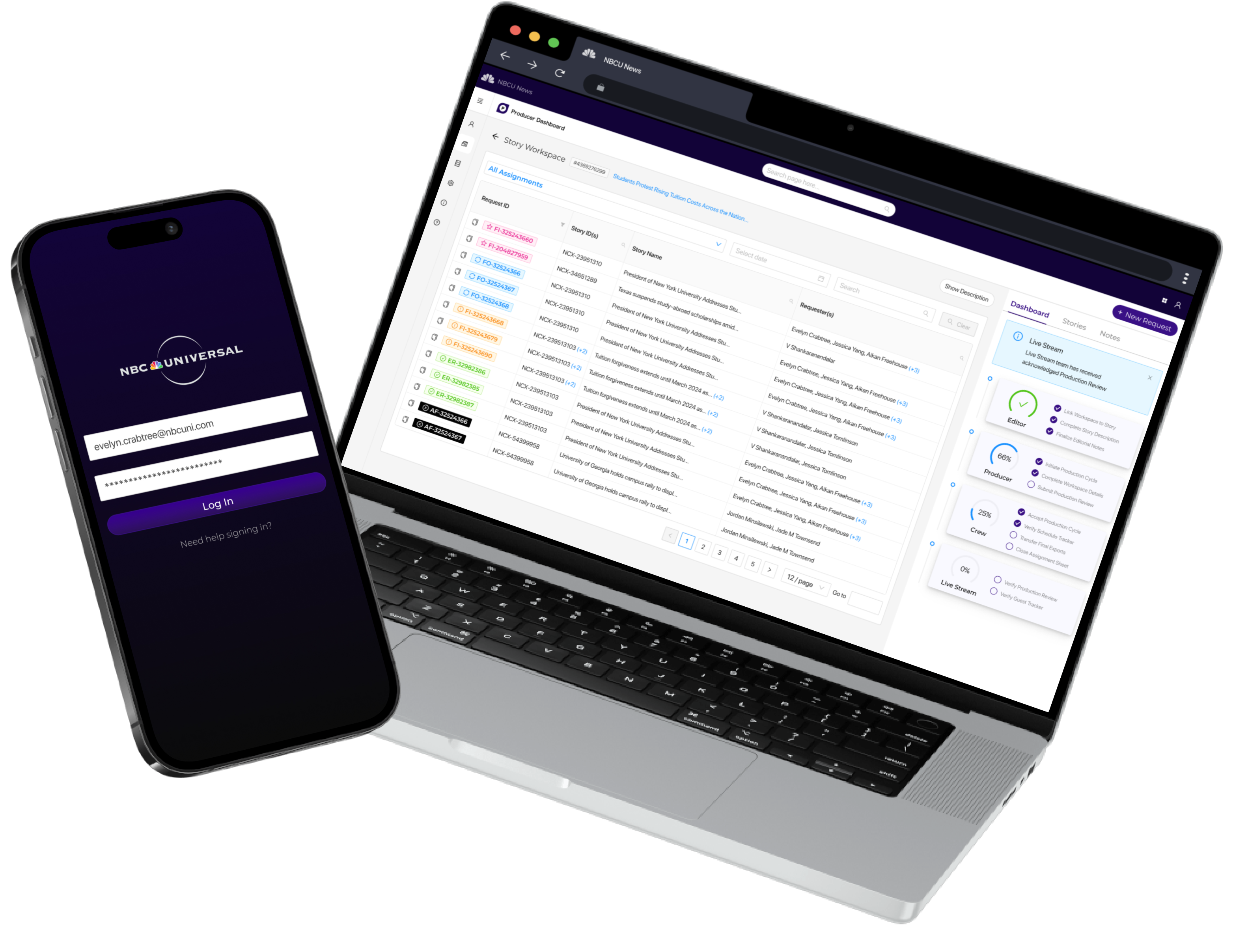
Five decisions turned 7 separate tools into one ecosystem people could work in. The biggest daily win: users stopped rebuilding their workspace every morning.

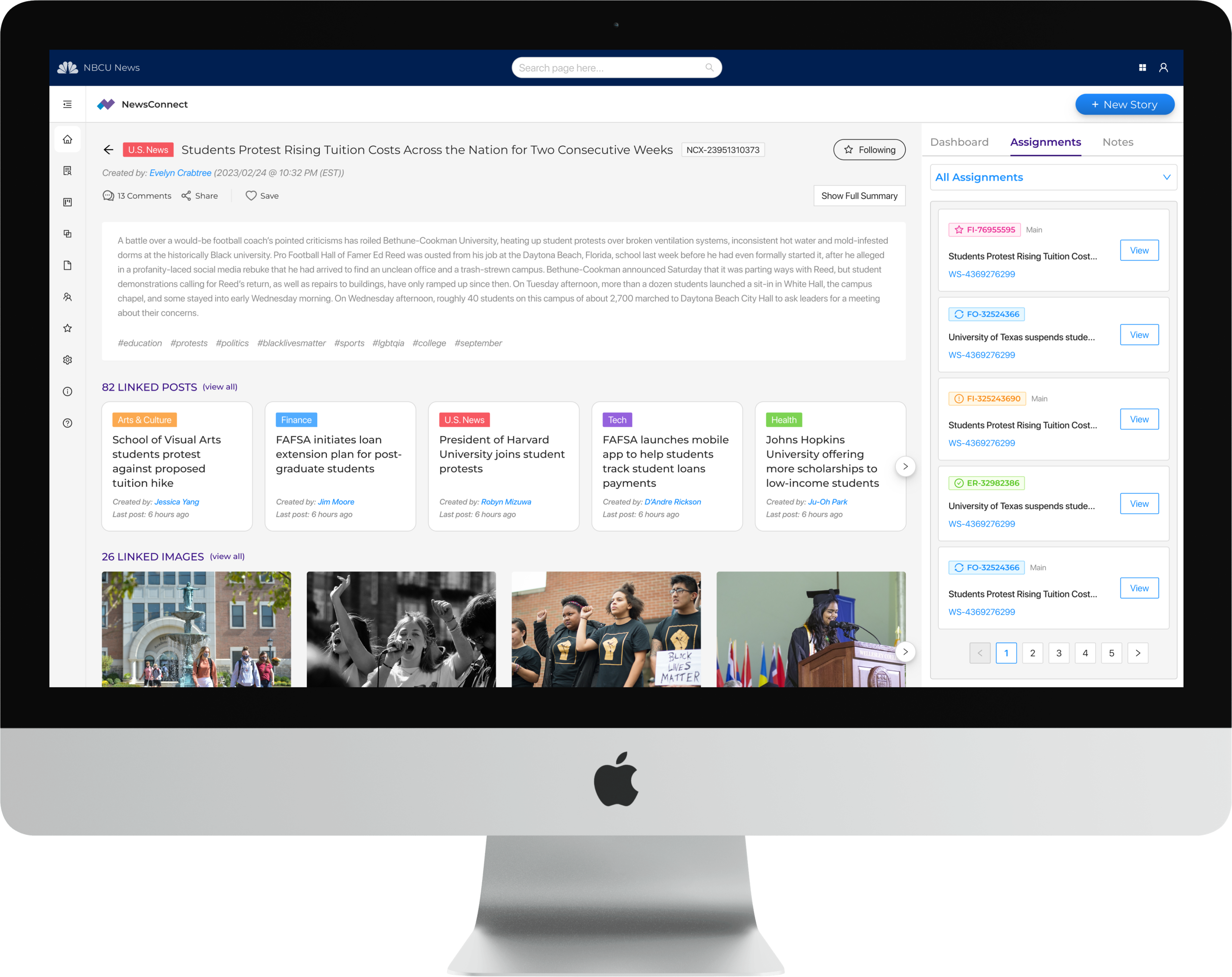
1. AI-Powered Collaboration
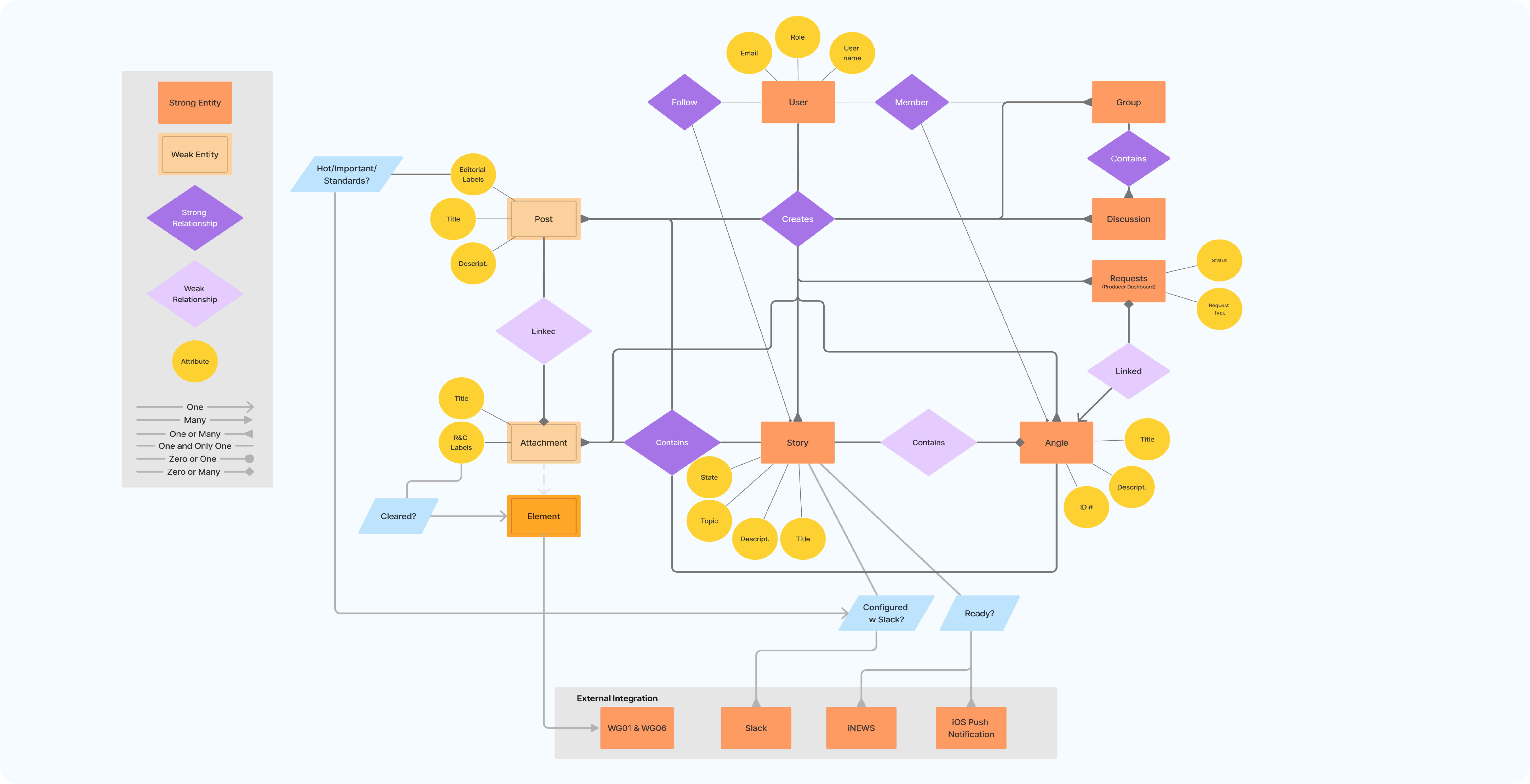
Decision: Give every story and every story asset one federated ID that follows it across all 7 tools, with AI generating tags and linking related stories into epics.
Why: Users lost track of which story they were on, what related coverage existed, and where their piece sat in the bigger story.
Result: Anyone can see their story, its related stories and its place in the epic at a glance, which made cross-team collaboration faster and more reliable.
2. Saved personalized views
Decision: Let users set their customizations once and save them as a personal view.
Why: Every role worked differently, and the old tools forced everyone to rebuild their setup at every login.
Result: One setup instead of a daily reset, while still honoring each role's own workflow.
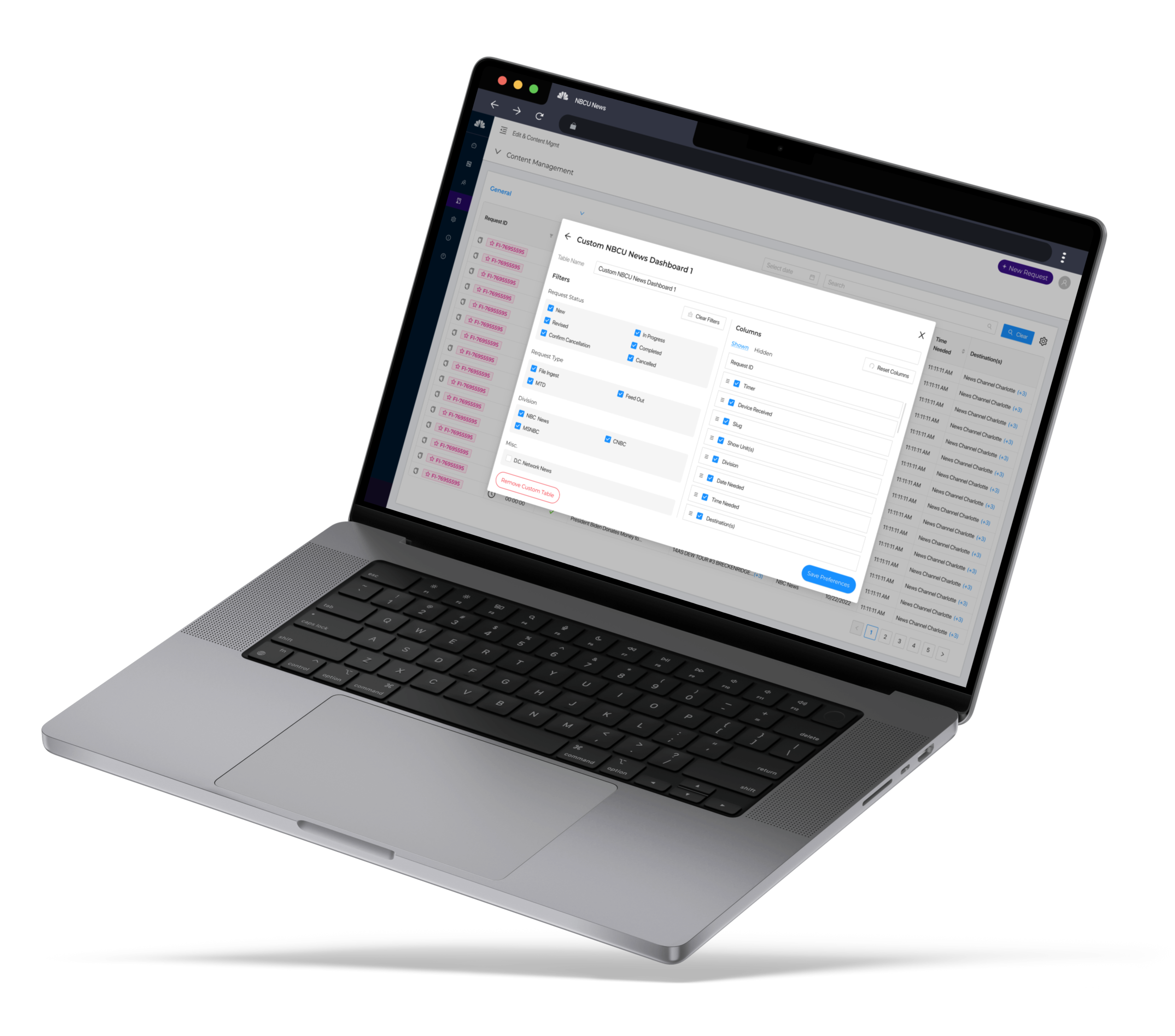

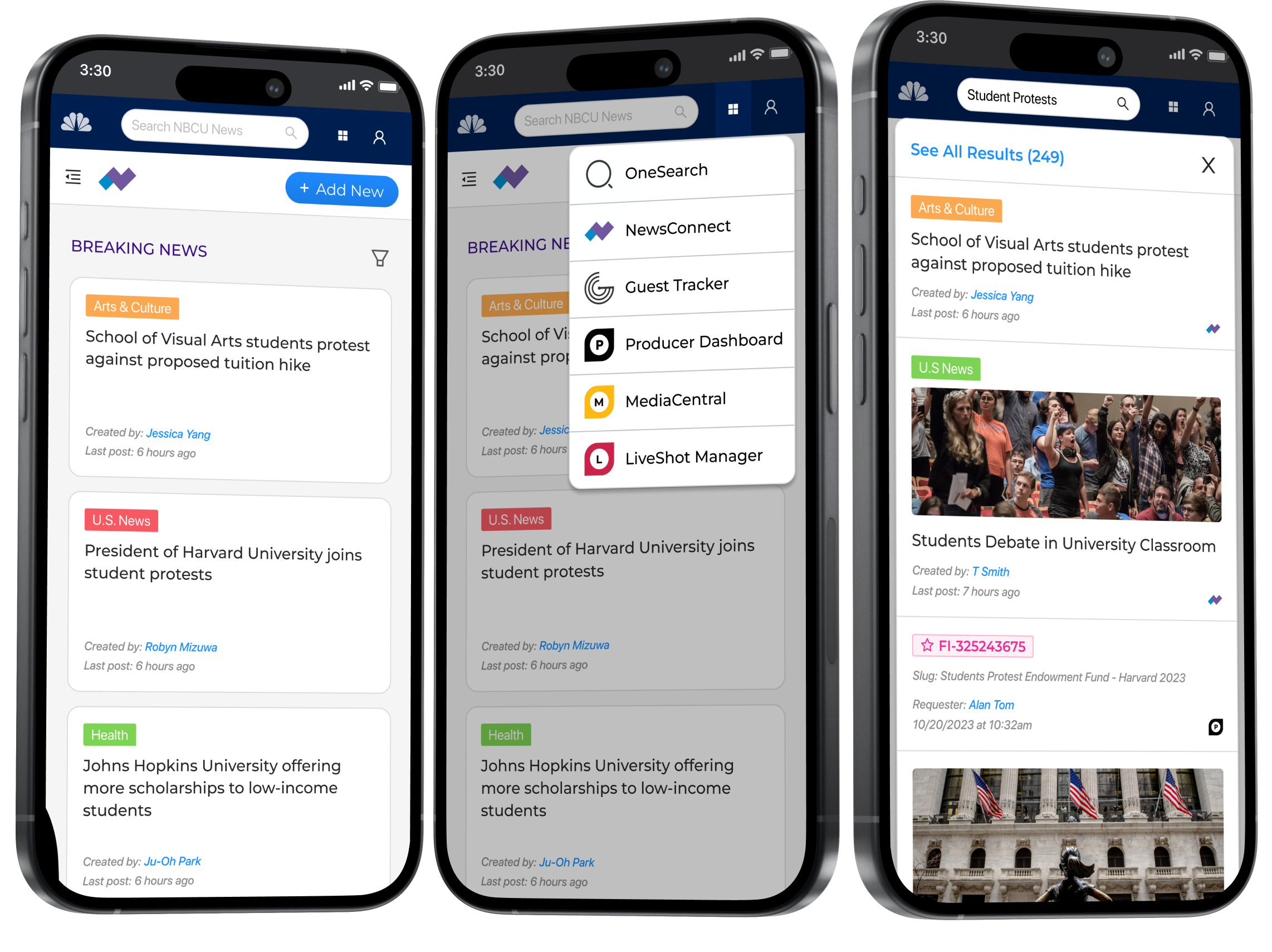
3. Global navigation & a clear hierarchy
Decision: One navigation model and a cleaner information hierarchy across the ecosystem.
Why: People had to dig through confusing layouts to find where they needed to work.
Result: Users find their work faster, in any of the 7 tools.
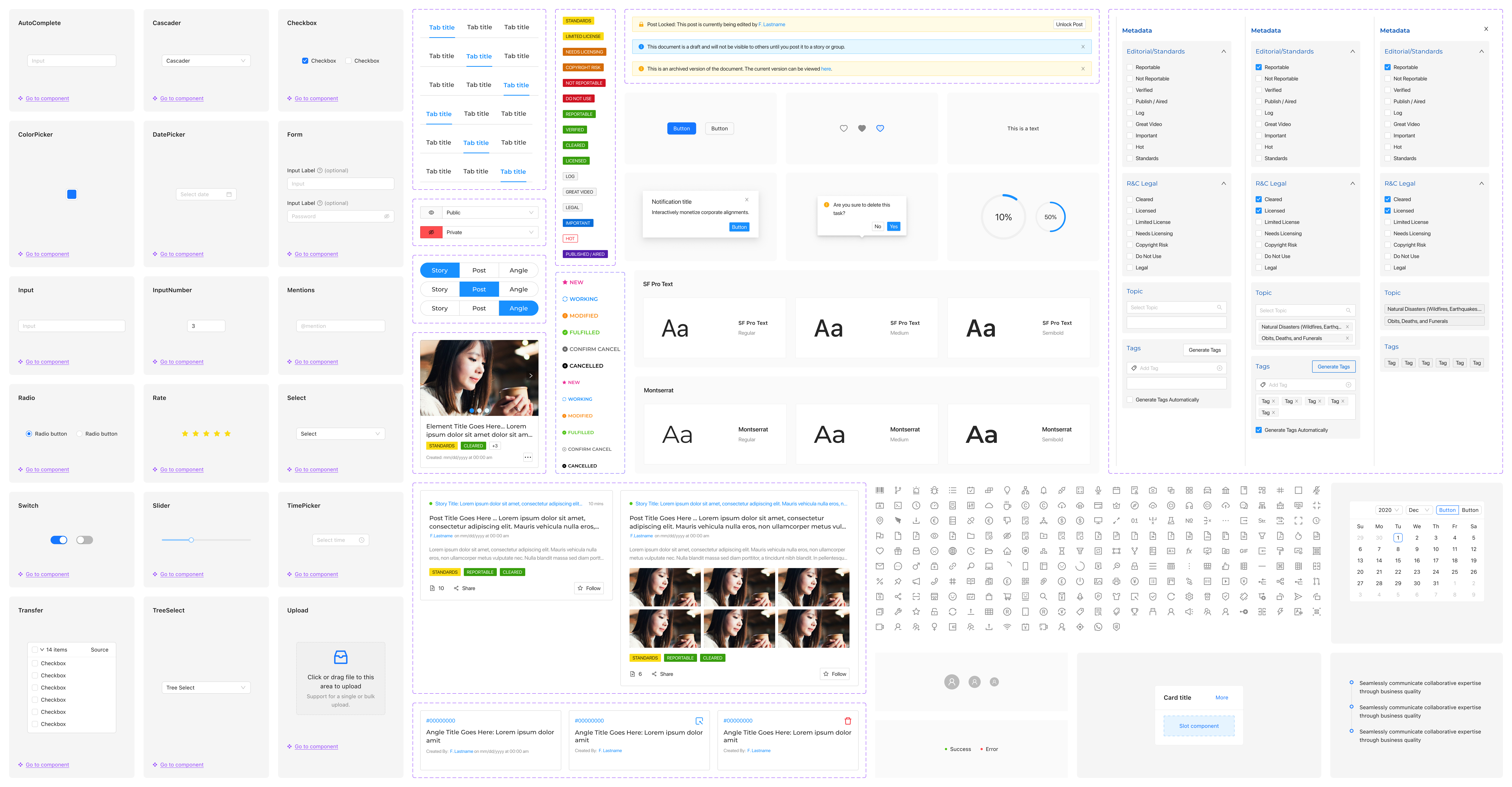
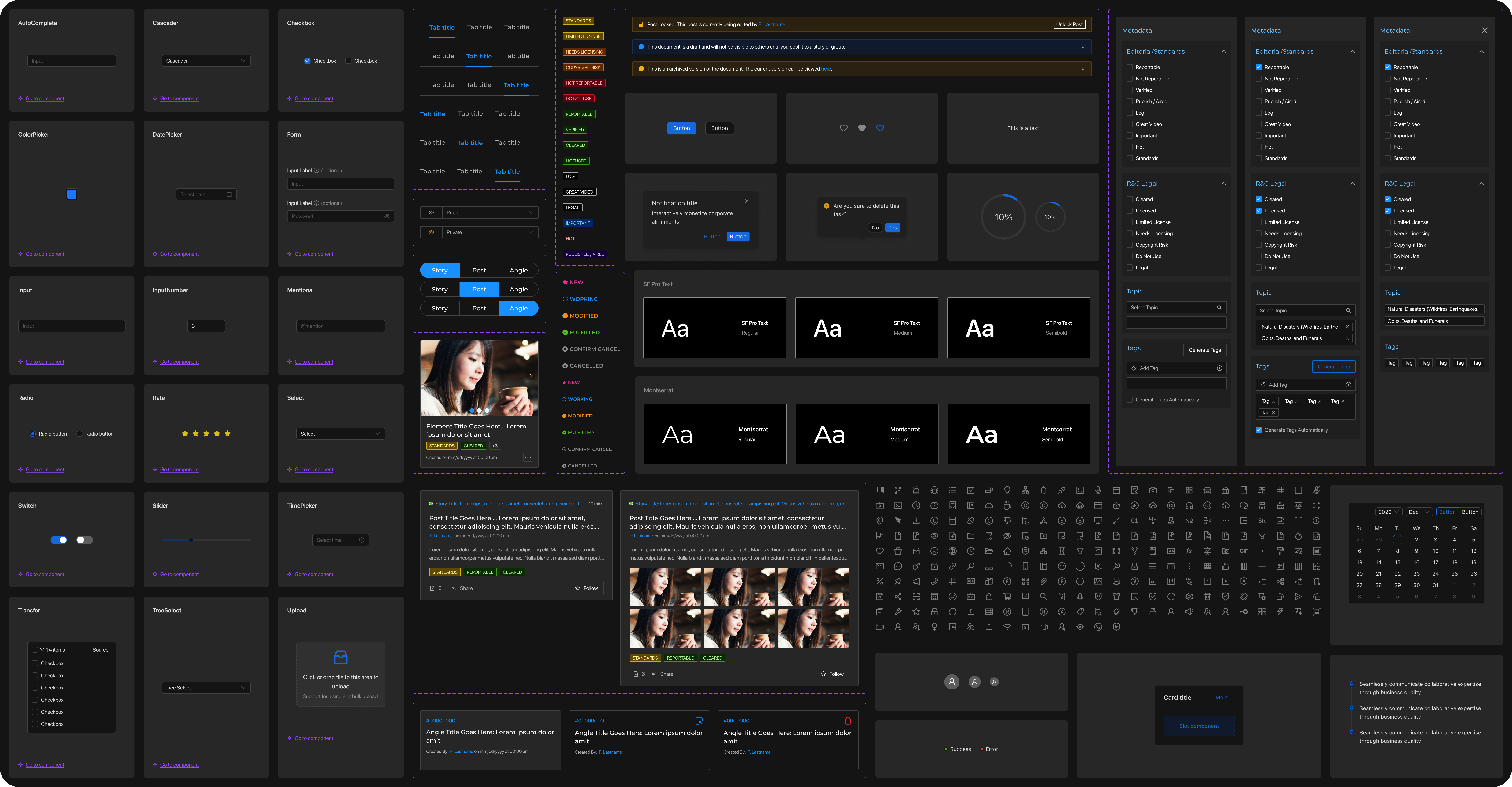
4. Atomic Design System
Decision: Build all 7 tools from one shared component library.
Why: Consistency across tools, and faster delivery for a small team covering a large portfolio.
Result: Both my design team and engineers reused patterns across all tools, improving handoff-to-production time by 41% vs. prior years.
5. Fully responsive infrastructure
Decision: Design every tool to work across desktop, tablet and mobile.
Why: News teams work in the newsroom, in the field and on set.
Result: Users can now remain within the company's ecosystem, fostering collaboration and consistent activity.
Challenges & how I overcame them
1. Business goals vs. the people doing the work
The tension: SVP leadership prioritized business goals. My job was to make sure the ecosystem also worked for the journalists, producers, directors and crews using it every day. Those priorities didn't always point the same way.
What I did: I built product strategy that tied user experience to the outcomes leadership cared about, so a better workflow was framed as a business result, not a competing ask. When leadership proposed a risky, all-at-once tool redesign, my research showed that users would struggle with the steep learning curve. Instead, I proposed a winning, four-phase migration strategy that smoothly transitions users from legacy workflows to our modernized ecosystem.
The result: Leadership backed my strategy that served both, and the ecosystem delivered a 36% lift in end-user workflow efficiency alongside the business goals.
2. Every user had their own way of working
The tension: Newsroom roles had highly individual workflows, each with its own customizations. Users pushed back on shared designs and wanted decisions that fit only their own needs, which made buy-in hard.
What I did: Instead of forcing one workflow on everyone, I designed a shared foundation with room for personal setup: one navigation model and design system, plus saved personalized views. We stress-tested this flexible approach with key end-users to ensure they could create individual workspaces without disrupting anyone else's workflow. Users were delighted with the customization features and quickly adapted to the more efficient process.
The result: Users kept the flexibility they cared about without the daily cost of rebuilding it, which turned resistance into adoption.
Big picture impact
Thirteen legacy tools became a 7-tool ecosystem, and the people running the news worked 36% more efficiently.
13 → 7 tools
Legacy tools consolidated into the modernized ecosystem
36% lift in workflow efficiency
Overall efficiency for journalists, producers, directors and crews to complete daily tasks on their workflow tools
41% improvement in portfolio delivery
Delivery across the tool portfolio vs. prior years, before I joined
4-person team
The newsroom design team I founded and led

Beyond the numbers
"Now I don't have to spend 30 minutes every morning setting up my workspace...it's a lot easier to find my assignments"
- No more daily reset. Saved personalized views replaced rebuilding a workspace at every login.
- Connected stories. AI-assisted federated IDs linked stories, assets and epics across every tool.
- Cleaner information. A clearer hierarchy made work easier to find.
Reflection
The lesson I carried forward: in a system used by many roles, flexibility is a feature to design for, not a demand to resist.
What I'd do differently: Include the most resistant user groups in co-design earlier. This secures early buy-in on initial concepts and ensures the redesign safely handles users with the highest specific needs.
What I'd build next: Expand the federated AI tagging system to proactively suggest related coverage as stories develop. This helps producers connect content seamlessly and strategize long-term epics.